What is a PRP injection, and what is it used for?
Published .
A platelet-rich plasma injection is a shot made from your own blood. How much it helps depends on the problem being treated.
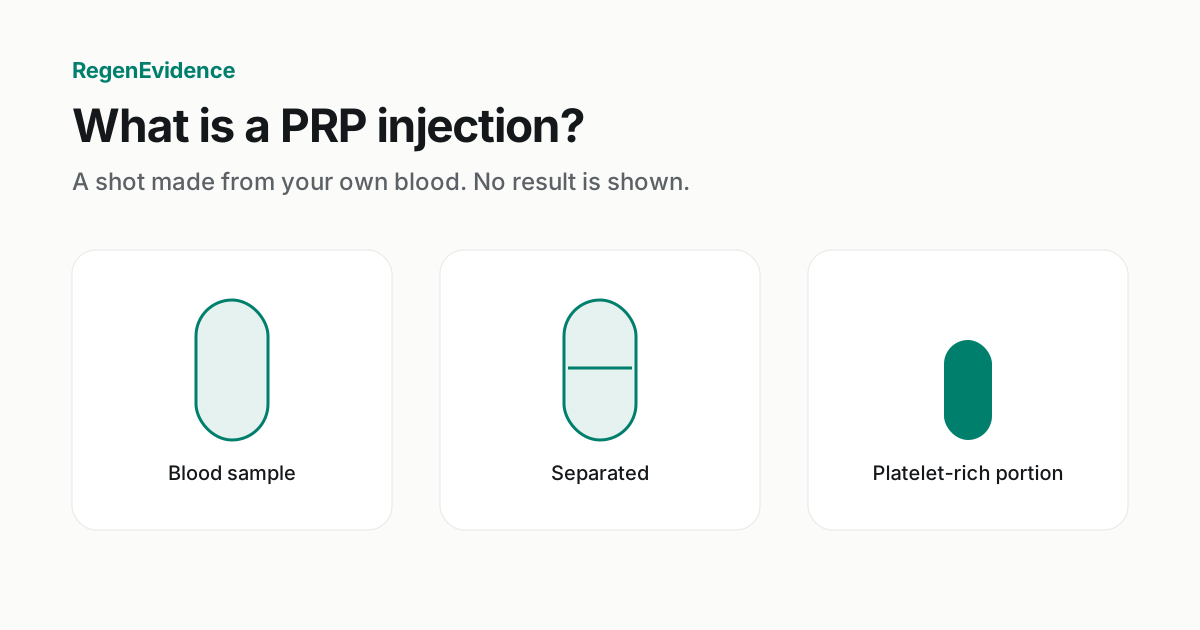
What a PRP injection is
A platelet-rich plasma (PRP) injection is a shot made from your own blood. A clinician separates out a portion rich in platelets and injects it into an area such as a painful joint, tendon or scalp. PRP is used for several conditions, but how much it helps depends on the problem being treated.12
What is platelet-rich plasma?
Plasma is the liquid part of blood. Platelets are small blood components that help stop bleeding and release proteins involved in healing. PRP contains more platelets than the original blood sample.12
The aim is to use those proteins to influence repair in the treated area. That is the idea behind PRP, not a promise that the injection will heal an injury. PRP is not the same as stem cell therapy. It concentrates platelets rather than providing a stem cell transplant.12
What is PRP used for, and does it work?
Being used for a condition does not mean a treatment has been shown to work well for it. The best answer is different for each use.13
Knee osteoarthritis
Osteoarthritis affects the joint and can cause pain, stiffness and difficulty with activities such as walking. PRP is offered to try to ease these symptoms.2
Many studies report improvements after PRP, but the size and reliability of the benefit remain uncertain. A 2025 assessment found major weaknesses in existing research reviews. One trial compared PRP with salt-water injections containing no PRP, used as a placebo. At one year, PRP was not clearly better at reducing pain or slowing cartilage loss. Other studies report benefits, so this is not a settled answer. PRP should not be presented as a proven way to regrow cartilage.34
Tendon problems, including tennis elbow
Tendons connect muscles to bones. PRP is used for some long-lasting tendon problems, including pain on the outside of the elbow and problems with the Achilles tendon at the back of the ankle.16
The evidence does not support treating all tendon problems alike. A review of tennis elbow trials found little or no important improvement in pain or arm function compared with a placebo injection. These findings do not describe every tendon condition or PRP preparation, but they show why common use alone is not proof of benefit.5
Other injuries, surgery, and hair loss
PRP is also used for some muscle or ligament injuries, during some operations, and for pattern hair loss. Evidence from one use should not be transferred to another. For example, a result in a knee study does not establish that PRP speeds recovery from a muscle injury.12
Scalp PRP is a different treatment goal from a joint injection. The expected outcome and supporting research need to be discussed separately.1 PRP is also offered for skin aging, where evidence of benefit is limited.1
Why are PRP results hard to predict?
PRP is not one standard mixture. Preparations differ in platelet concentration and in the amount of other blood components they contain. Studies also use different numbers of injections, spacing between visits and rehabilitation plans.23
The condition and the person receiving treatment matter too. It is more useful to ask what a particular approach has shown for your diagnosis than to ask for one overall PRP success rate. Some people report relief; others get no useful benefit.2
What happens before and during a visit?
Before treatment, the clinician reviews the diagnosis, health history and medicines. Blood conditions and medicines that affect bleeding may influence whether PRP is suitable. Ask the team for its preparation instructions, including what to do about food, drink and medicines. Do not stop prescribed medicines on your own.12
The visit usually has three main parts.12
Blood collection. A sample is taken from a vein.
Preparation. A machine called a centrifuge spins the blood so the platelet-rich portion can be collected.
Injection. The clinician cleans the treatment area and gives the injection. Ultrasound may help guide the needle. Numbing medicine may be used, depending on the procedure.
The injection can be uncomfortable. The total visit includes preparation as well as the shot, and timing varies. The team should explain whether it proposes one injection or a series and what supports that plan.12
What is recovery like?
Soreness, swelling or bruising can follow the injection. Some people have a temporary increase in pain. How long this lasts, and when normal activity can resume, depends on the area treated and the procedure.126
PRP is not an immediate painkiller. When improvement occurs, it may be assessed over weeks or months rather than right after the shot. Improvement is not assured, and there is no single duration of benefit for all uses. A rehabilitation plan may still be needed for a joint or tendon problem.12
Before leaving, ask for written aftercare instructions, a contact for unexpected symptoms and a clear plan for checking progress. After a joint injection, sudden severe joint pain or a hot, swollen joint needs urgent medical assessment, especially if you also have a fever or feel unwell. These symptoms should not simply be assumed to be part of healing.7
What are the risks?
Common short-term problems include soreness, swelling and bruising. Bleeding, infection and injury to nearby nerves or tissues are also possible.16
Using your own blood avoids exposure to donor blood, but it does not make the procedure risk-free. Blood still needs careful handling, and a needle still enters the body. Any added medicine or skin preparation may also affect the risks.12
There is no one reliable complication rate that applies to every PRP procedure. Ask about the risks for the specific injection and for your health history, rather than accepting “it's natural” as a safety explanation.16
What other options could help?
The alternatives depend on the diagnosis. For a tendon problem, care may include changes to the activities that trigger pain and a structured strengthening or rehabilitation program. Some people may be offered a brace or other treatments.8
For knee arthritis, options include exercise and physical therapy, weight management when appropriate, suitable pain medicines and supports such as a brace. Some injections can provide symptom relief, and surgery may be considered when severe symptoms persist. Each option has its own benefits and risks.9
PRP should be compared with those relevant choices, not presented as the only alternative to doing nothing.89
Will insurance cover PRP?
Coverage is often limited, and many patients pay themselves. Check directly with the insurer for the exact procedure and diagnosis before treatment.16
Ask what the full plan includes: assessment, each injection, any imaging, follow-up and rehabilitation. A recommendation to buy a series does not by itself show that more injections will work better. Ask how progress will be measured and what happens if treatment does not help.26
Questions to take to your appointment
What is causing my symptoms, and what is PRP meant to improve?
What benefit has this approach shown for my particular condition?
How does it compare with rehabilitation and the other options available?
Why are you suggesting this number of injections?
What might recovery involve, and when will we assess whether it helped?
What side effects should I expect, and which symptoms need medical attention?
What are the full charges, and what will insurance cover?
If I do not improve, what is the next step?
PRP is a way to concentrate and inject part of your own blood. Its usefulness depends on the condition and the treatment plan. Understanding the likely benefit, the uncertainty and the alternatives is more helpful than a general promise of faster healing.12
This article provides general education, not personal medical advice.
Sources · 9
- 1Source 1(opens in a new tab)
Patient page
- 2Source 2(opens in a new tab)
Patient page · 2024
- 3Source 3(opens in a new tab)
Review page · 2025
- 4Source 4(opens in a new tab)
Trial page · 2021
- 5Source 5(opens in a new tab)
Review summary · 2021
- 6Source 6(opens in a new tab)
Patient page
- 7Source 7(opens in a new tab)
Patient page · 2026
- 8Source 8(opens in a new tab)
Patient page
- 9Source 9(opens in a new tab)
Patient page
Ask a question in your own words. A question stays on the ask page. It is not added to this article or to a share link.
For learning only. Not medical advice. Talk to your doctor.